Webspaces
Selected Design and Research Projects:

Jellow Communicator System (Jellow Labs)

Solar Project – carnivals, cultures and daisy-chains

Nature Embedded – a design technology experience

Design Technology Interactive Experiences in Public Spaces

Centre of Social Media Innovations for Communities (COSMIC)

System Design of Retail Outlets and Corporate Identity Program for Bharat Petroleum

Creating Digital Online Tools for Learning Design ('e-kalpa-III')

Creating Digital Learning Environment for Design in India ('e-kalpa' I & II)

Webspace on ‘Gandhi through stories and interactions’

Co-ordinating/Chairingconferences on 'Design Education', 'Typography', 'Designing for Children', 'Sustainability' in India

Designing Thinking and Innovation Curriculum in School Education

Designing Thinking and Innovation in Higher Education
Jellow Communicator System (part of Jellow Labs)
https://www.jellow.org
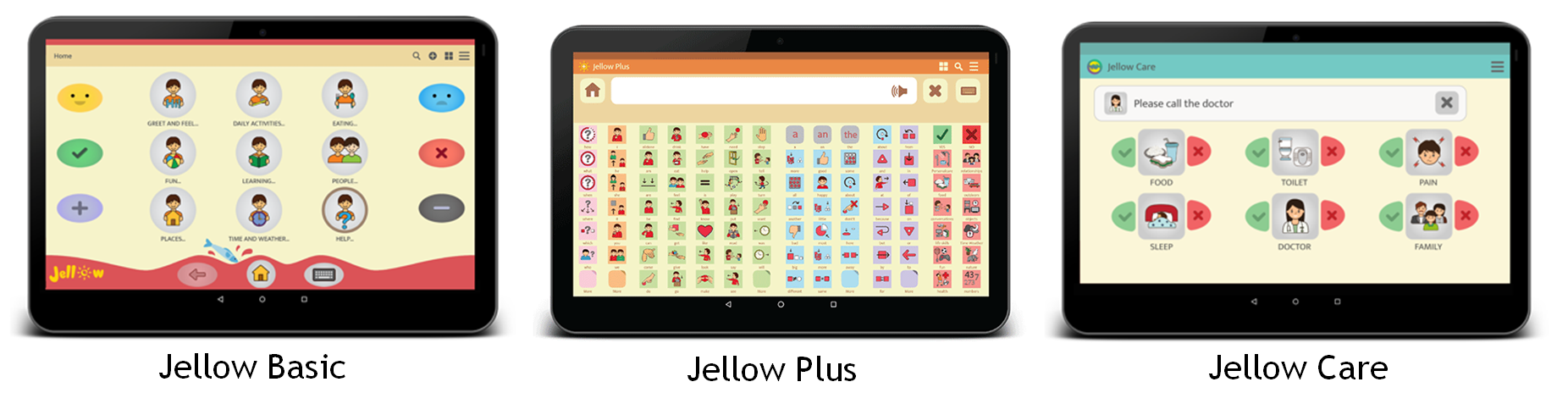
Jellow Communicator is a friendly Augmentative and Alternative Communication (AAC) system that uses icons/images to enable aid communication in children learning to speak or with difficulty with speech and language.
A novel Visual Emotional Language Protocol (VELP) was conceived in order to enhance the language ability of Jellow. VELP represents the 6 core expressive icons of the interface. Using these core buttons, the child can communicate their likes, dislikes, and needs with others.
Jellow is available in the following 13 languages with multiple accents - Hindi, Bengali, Gujarati, Marathi, Tamil, Telugu, Punjabi, English, French, Spanish and German
Jellow Basic AAC Communicator helps non-verbal children to communicate and gradually learn to speak - especially those with Autism, Cerebral Palsy, Down's syndrome.
Jellow Plus AAC Communicator helps non-verbal adults to communicate by constructing their own phrases/sentences and gradually learn to speak
Jellow Care AAC Communicator for sudden Speech & Hearing Loss and provides an immediate assistance in communication for people with Aphasia and those suffering from a stroke
Jellow team is proud to have won these prestigious Awards: Unicef Innovation Award, India's National Award from our President, MBillionth Award, Microsoft Design Expo Award, the Nipman-Microsoft Award and the Status of a Digital Public Good.
Ravi Poovaiahand Dr. Ajanta Sen are the co-directors for this open source/design public good project.
Project details in brief:
Project duration: 2016 - ongoing
Number of Beneficiaries at present: 30,000
Collaborating Institutions: UNICEF, NIDI-MoE, SINE-IIT Bombay, Nair Hospital, National Trust - Ministry of Social Justice and Empowerment, IDC-IIT Bombay
Budget: 3 crores
Solar Project–carnivals, cultures and daisy-chains
https://www.colorsofindia.com/ajanta/writings/solar-project-5-11-02-for.pdf
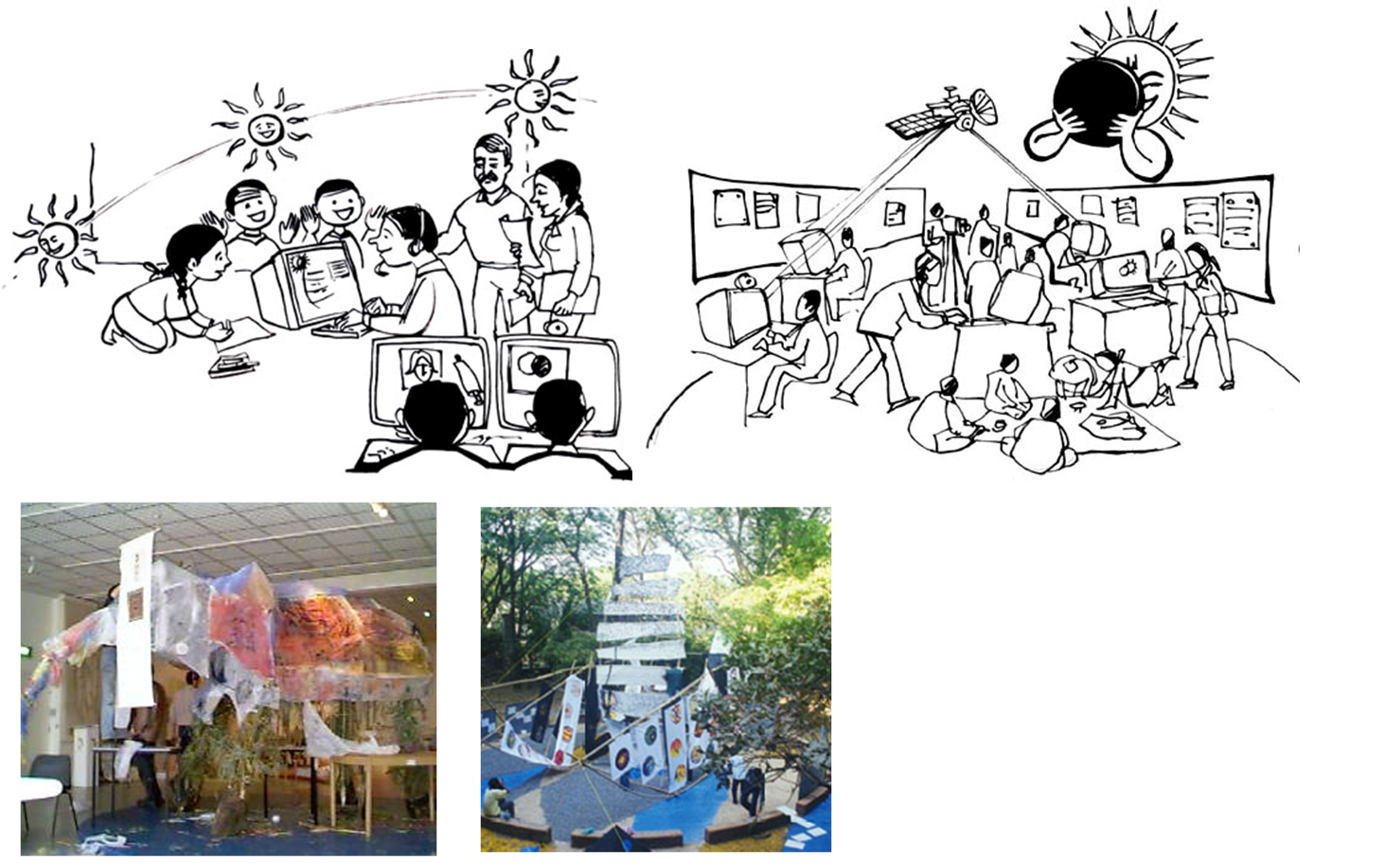
The Solar Project is a pioneering networking technology project since 1997 that created cross-cultural collaborative learning environments for children as a joint UK-India initiative between children’s schools and design institutes in India and UK.
This Projectis an experimentation into newmedia technology undertaken jointly by twouniversities Falmouth College of Arts (FCA), UK and IndianInstitute of Technology (IIT) Bombay, India. The collaboration(now extended to West Dean, Chichester) continues to date.
The project aimed at creating "new art, new audiences and new experiences," in turn, based on connecting up distantly located communities with one another through design-technology initiatives in order to create a body of work that would be a direct outcome of these cross-cultural interactions.
An exploratory project rallying around the use of the computer-mediated technologies to "connect up" communities located at great physical distances, particularly those from different cultures. Project has sought to experiment with children and other non-technology users as the chief user-constituency and attempted to interface them with the networking technologies (both emerging and conventional) with an aim toward collaborating and creating across pre-designated themes on the Net.
The project set many technology and design milestones and has won over a hundred awards to date.
Dr Ajanta Sen has been the International Coordinator and Director, ‘Project Solar Eclipse' along with Prof. Robert Pulley now at Royal College of Arts, London.
Project details in brief:
Number of events conducted: 10
Number of children involved: 250


‘Nature Embedded – a Design Technology Experience’ exhibition was on public display at the National Gallery of Modern Art (NGMA), Mumbai from 3rd Feb to 4th March 2018.
This exhibition consists of fifteen different medias that range from the conventional calligraphy, expressive photography, tessellated murals and product installations, to the more unconventional and emerging medias that leverage ethnography, infographics, motion graphics and interactivity(s) to convey life’ myriad messages.
In the process, Humans had also found it imperative to protect and preserve Nature from the deleterious effects of unbridled greed that Humans can be capable of. In offering this tribute to Nature, the Exhibition finds it opportune to leverage Design and Technology as expressive tools with which to convey the idea of our intersections with Nature. And yet, remaining artistic as a celebration of Art as a mirror of Society.
We are now exploring the possibilities of setting up an interactive Museum for Young Minds on the theme of understanding ‘Nature through Culture’ with the Ministry of Culture.
Dr. Ajanta Sen was the PI and curator and Prof Ravi Poovaiah was the co-designer for this project.
Collaborating Institutions: NGMA, Ministry of Culture, Ministry of Education, IDC-IIT Bombay
Design Technology Interactive Experiences in Public Spaces

‘Design Technology Experience’ as part the ‘New-Age Technology Platform’ at the India International Science Fair held at Kolkata in December 2019. At this platform, we had put up 8 Interactive installations across a space encompassing over 3000 sq feet area. The exhibition drew students, professionals and general public from across India and was very heavily attended and widely appreciated.
These learner-friendly interactive installations will be conveniently located at design schools, various public spaces such as at the Science Museums, at exhibitions, at design conclaves and during roadshows. We are in discussions with many of our stakeholders about how these installations may be realised.
Ravi Poovaiah is the PI and Dr. Ajanta Sen Co-PI for this sponsored project from DST.
Collaborating Institutions: DST, International Science Fair, IDC-IIT Bombay

Centre of Social Media Innovations for Communities (COSMIC)
http://cosmic.nus.edu.sg
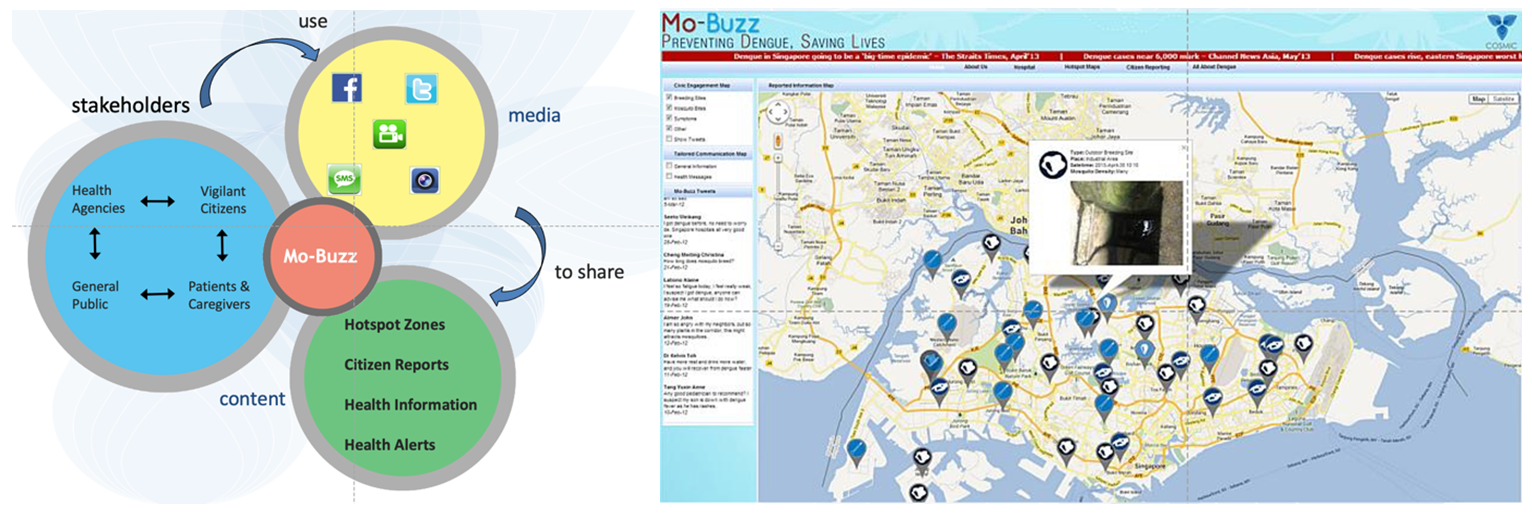
The Centre of Social Media Innovations for Communities (COSMIC) is a collaborative initiative between three centers of excellence – two from Singapore, the NUS (National University of Singapore) and the NTU (Nanyang Technological University), and one from India, IITB (Indian Institute of Technology Bombay, Mumbai). The centre is supported by the multi-agency Interactive Digital Media Programme Office (IDMPO) hosted by the Media Development Authority (MDA) of Singapore.
COSMIC aims to empower communities, through social media innovations that improve the way they live, work and play, specifically those in the informal economy who are typically underserved by existing technology vendors and telecom service providers.
The research envisions new interaction paradigms and information technology scenarios, which have the potentials to empower the next billion users - focusing on the common man in its everyday pursuit of activities in the 21st century.
The four strands presently taken up for building social media solutions/interventions are agriculture, health, technology infrastructure, and social tools to help port the solutions.
Ravi Poovaiahserved as the co-director of this research project from IIT Bombay and
Dr. Ajanta Sen served as a Senior Scientific Researcher of this research projectat NTU in Singapore.
Project duration: 2010 - 2016
Collaborating Institutions: Department of Computer Science – NUS, Department of Humanities – NTU and IDC School of Design - IIT Bombay
Research and Project Staff involvement: 30 research staff, 22 Ph D students, 9 post-docs and 55 graduate/undergraduate students
Papers published in top tier international journals and conferences: 67, Patents filed: 5
Budget: S $ 10 million in 5 years

System Design of Retail Outlets and Corporate Identity Program for Bharat Petroleum
http://www.dsource.in/case-study/retail-identity-design-bpcl

The Retail Visual Identity System for Bharat Petroleum as a roll-out program was implemented in over 22,000 retail outlets across India (as design consultants with BPCL from 2003 to 2006 and from 2016 – 2019) to implement the RVI program across BPCL retail outlets.) as part of a Future Vision Project. This program brought in visibility, reliability with increased customer base.
BPCL’s corporate goals of Caring, Reliable and Innovative were woven into Strategy of designing the corporate vision through its outlets.
. Design to tell a Story – with the use of Water as an inspiring metaphor as part of one of the key elements of Nature to translate BPCL’s Corporate Vision into various Visual Elements at the Retail Outlets
. Experience designing – not just a product but includes a process with the design of each significant user centered touch points
. Design the Retail Outlet into an inviting social space - through the notion of ‘site value capture’
. Designed to last for a period of 15 years with less maintenance, use of new materials and technologies that include automation and safety features
. in 2016, the Retail Outlets were redesigned to bring in efficiency with design interventions and the use of LED lights
Prof. Ravi Poovaiah and Dr. Ajanta Sen have been retained as designers (due to the success of this program) and have been commissioned to re-look at the existing program and envision a new program for the next 20 years.
Collaborating Organisations: BPCL, IDC-IIT Bombay
Budget: Rs 2000 crores
Creating Digital Online Tools for Learning Design ('e-kalpa-III')
https://www.dsource.in/tools

Project e-Kalpa III (Action Design Initiative (ADI) under the scheme National Initiative for Design Innovation (NIDI)) is sponsored by Ministry of Education and being carried out at the IDC School of Design, IIT Bombay.
The main focus of e-Kalpa III project is to develop ‘Design Tools’ that are useful to the design eco-system comprising students, faculty, and professionals who are or have been a part of formal learning from design schools. These design tools are meant to help them with high quality, authentic learning material and bridge the quality and quantity gap currently faced by most design schools. Additionally, a very crucial intent of e-Kalpa III project is to enhance the design skills of those from the informal sector (numbering in the millions) who are completely devoid of any access to formal design learning material and yet serve large ubiquitous design need of our population (both urban and rural).Ravi Poovaiah is the PI for this research and development of this open access project and Dr. Ajanta Sen has been the primary advisor and mentor for the development of tools.
Project details in brief:
Project duration: 2020 – 2026, Institution: IDC, IIT Bombay
Number of Tools developed till now: 8 numbers, Ongoing: 10 more
Budget: Rs 8 Crores in 5 years
Creating Digital Learning Environment for Design in India ('e-kalpa' I&II)
http://www.dsource.in/

This project on 'Creating Digital-learning Environment for Design', also called 'e-kalpa', is sponsored by the Ministry of Human Resources, Government of India as part of the National Mission in Education through Information and Communication Technology.
The Key Themes of this project are creating digital online content as courses and case studies for learning Design with e-Learning programs on Design and developing digital design resource database including the craft sector.
Contents:
The site contains
- 150 Courses on Design Learning in different domains
- 650 Resources in the form of fine examples of design and crafts.
- 450 Case studies of Design Projects undertaken by faculty members, professionals and design students.
- 1000 Video lectures and presentations by subject experts
- 900 case examples of a visual Gallery that has documented works of the rich tradition of art and design seen across different regions of India.
- 2TB of content has been uploaded at www.dsource.in
- The site has 30.000 page views per day, approximating 1 million page views per month, 12-15 million page views per year
Ravi Poovaiah is the PI for this research and documentation of this open design project and Dr. Ajanta Sen has contributed to many of the resources available on Dsource.
Project details in brief:
Project duration: 2010 – 2014 (phase 1) and 2014 – 2018 (phase II)
Collaborating Institutions: 45 faculty from 3 institutes – IITBombay, IITGuwahati and NID
Research and Project Staff involvement: 30 Project staff, 50 Design Graduates as Design Associates, 150 graduate/undergraduate students
Gandhi through stories and interactions
https://gandhistory.in/
‘Gandhi through stories and interactions’ is an interactive, inclusive Gandhistry.in website and a project created for the 150th anniversary of Mahatma Gandhi's birth, using narratives and interactions to teach his principles, especially to children, the elderly, and people with disabilities.
The website moves beyond a chronological approach to engage audiences through interactive platforms, demonstrating Gandhi's philosophy of nonviolence and his significant impact on Indian independence through accessible and engaging content.
Focus on Experiences:
The project highlights stories from Gandhi's personal life, his family's past, and interactions with villagers, students, and workers who witnessed his campaigns firsthand.
Interactive Learning:
By moving beyond simple information, the site aims to create an engaging experience where users can interact with the content, fostering a deeper understanding of Gandhi's teachings.
Demonstrating Key Principles:
Stories are used to showcase pivotal moments, such as Gandhi's journey to fight for Indian independence, his leadership in movements like the Salt Satyagraha, and his commitment to nonviolent resistance (Ahimsa).
Dr. Ajanta Sen was designer + curator, and Prof Ravi Poovaiah was the co-designer for this project.
Collaborating Institutions: Ministry of Culture, Ministry of Education, D’source, IDC-IIT Bombay
Co-ordinating/Chairing conferences on'Design Education', 'Typography', 'Designing for Children', 'Sustainability'in India
‘Designing Education’–2019, 2021, 2022, 2024
an national/international event with the intention to discuss developments and evolving paradigms in the field of Design Education both within the country as well as from outside.
website: https://dsource.in/dportal/adc/index.php
‘Typography Day’ - 2008, 2009, 2010, 2011, 2012, 2013, 2014, 2015, 2016, 2017, 2018, 2019, 2020, 2021, 2022, 2023, 2025
- Conference, Workshop and Meet organised by IDC, IIT Bombay along with InDeAs and Design-in-India in the month of February/March at different institutions in India
website: www.typoday.in
‘Designing for Children’– 2010, 2019
an international event combining and educational meet, conference and exhibition held in February 2010 ( and again held during December 2019) at the IDC, IIT Bombay
Website: www.designingforchildren.net
The Workshops and symposiums on Design Education in India are meetings to discuss, address, examine and rethink design education at the undergraduate and post-graduate levels. This will include weighing the relative strengths and weaknesses of segmenting discipline-specific courses of study versus crafting universal and trans-disciplinary curricula, as well as the need to address art and design history, heritage, and craft.
Prof. Ravi Poovaiahand Dr. Ajanta Sen have been initiating, co-ordinating and co-chairing these initiatives.
Designing Thinking and Innovation Curriculum in School Education
https://sia.mic.gov.in/DTI

Design Thinking and Innovation(DT&I)is being implemented in schools in India on behalf of the Ministry of Education following the mandates of the National Educational Policy 2020.
DT&I curriculumis beingdeveloped for Grades 6 till Grade 12. In Grades 6, 7, 8 the students will get an initial exposure to DT&I for a duration of 18-20 hours such that it can create an interest in this field, nurture their sense of curiosity, motivate them to explore, experiment and take it up as a subject to pursue from Grade 9 onwards. From Grade 9 till Grade 12, DT&I will be introduced as a regular skill subject comprising of various related modules with duration of 160 hours for each grade.
This program is being introduced in CBSE schools as part of their curriculum from 2022 onwards.
Ravi Poovaiah is Chair of the committee for implementing Design Thinking and Innovation in Schools in India and Dr. Ajanta Sen has been part of the team for content development as well as training the teacher trainers across the country.
In 2022-23, 2300 CBSE schools have introduced DT&I curriculum training over 1,20,000 school students every year.
Collaborating Institutions/organisations: MoE, CBSE, Innovation Cell- MoE, IDC-IIT Bombay
Duration – 2022- onwards
Designing Thinking and Innovation in Higher Education
http://dsource.in/dti/

Conceptualization and content development of ‘Design Thinking and Innovation’(DT&I) inHigher Education is mainly aimed at technicalinstitutes. This is offered as a Swayam module through Open Design School starting in July 2024 and January 2025. A total of 40,000 learners have enrolled in this course out of which 8,000 are faculty members.
The Design Thinking and Innovation course will help participants Identify problems and be able to find solutions and apply Design Thinking processes and methods to solve various problems. The course will help participants learn the fundamentals/essentials of the Design Thinking and Innovation process. The participants will solve live contextual problems such that it creates awareness in the students through observation, discovery, analysis, experience, collaboration and reflection.
The course is meant for (1) faculty members at both school and colleges who would like to understand this subject, (2) students of higher education (3) professionals in any field who would like to explore creative possibilities in their respective areas of expertise and (4) entrepreneurs.
Ravi Poovaiah is the co-ordinator for the course on Design Thinking and Innovation and Dr. Ajanta Sen has been part of the team for content development.
Collaborating Institutions/organisations: AICTE, Innovation Cell- MoE, IDC-IIT Bombay
Duration – 2024- onwards


